The answer to the question nobody asked yet.
The value of an identity log is almost never realised on the day. It is realised eleven months later, when a result is disputed, an asset is missing, a certificate is queried by an employer abroad, or a panel wants to know who was in the building. Biolog is built so that the answer exists before anyone thinks to ask.
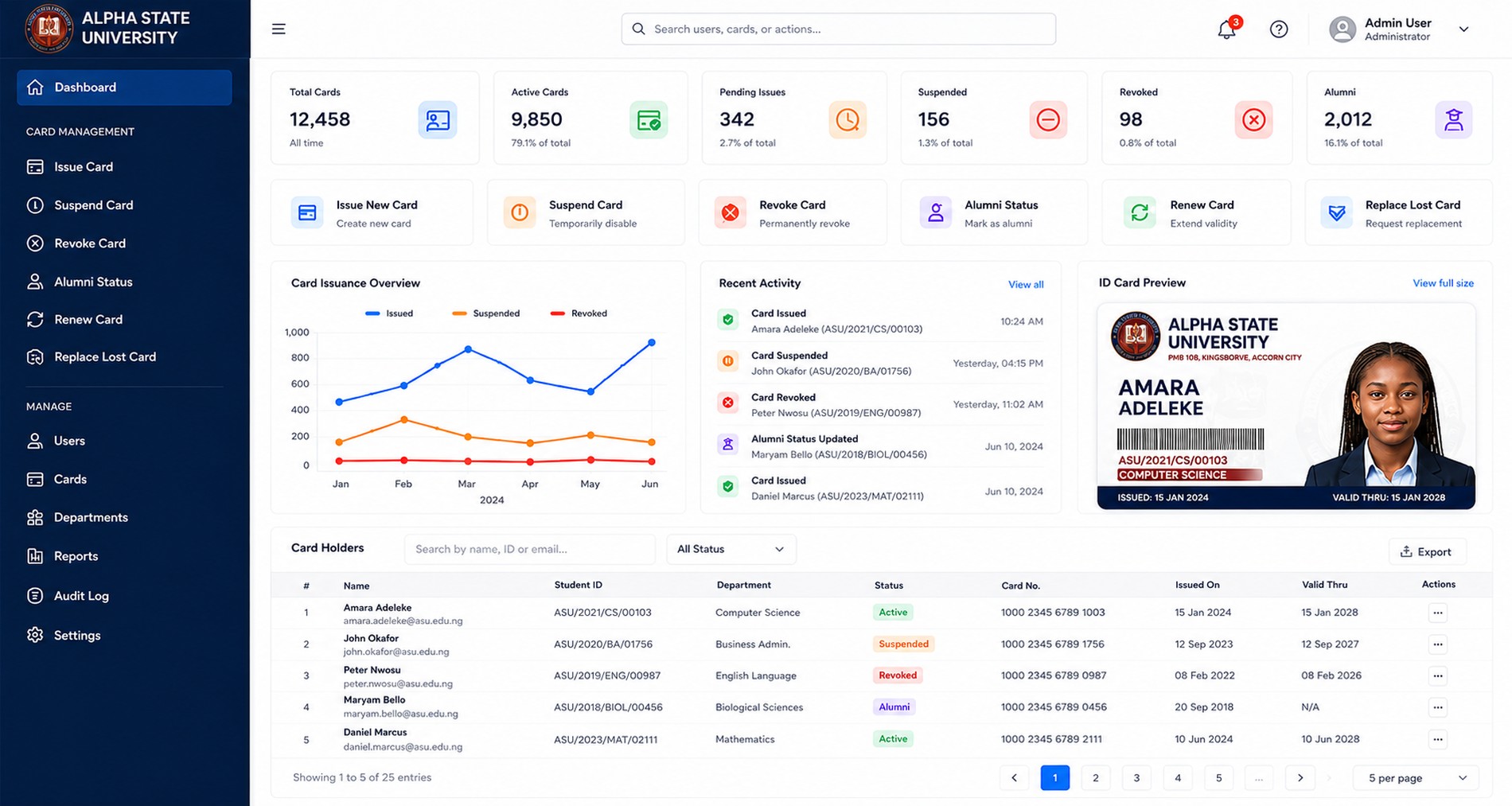
Administration
Role-based access control
Enrolment officers, verification operators, card production, supervisors, administrators, auditors — each seeing only what their role requires.
Institution hierarchy
Faculties, departments, campuses, branches, sites, each with delegated administration.
Device management
Register, assign, monitor and retire verification devices; see which are online, which have not synced, which are producing failed matches.
Configuration
Capture requirements, verification rules, access rules, credential design, all changed centrally without a redeployment.
Audit trail
Every enrolment, every card issued, every verification, every revocation, every configuration change: timestamped, attributed to an operator and a device, and written to a log that cannot be edited after the fact.
This is the part that a compliance officer reads first and a demonstration audience notices last.
Reporting
- Operational — enrolment throughput, verification volumes, failure rates by device and location, sync status
- Exception — failed matches, refused entries, flagged verifications, duplicate detections, unusual patterns by operator or device
- Institutional — attendance, examination-hall verification against the nominal roll, access patterns, card estate status
- Export — scheduled and ad hoc export to CSV and PDF; API access for institutions running their own analytics
See Biolog running against your own process.
A working session with our team, not a slide deck. Bring your enrolment volumes, your verification points and your awkward edge cases. We will show you how Biolog handles them.